Community Stories
Local archives across generations
A gentle method for using local archives to connect generations through provenance, conversation, and shared interpretation.

Local archives are often made of ordinary things: a letter, a recipe, a shop sign, a photograph, or a notebook with a familiar hand. Their value is not that they prove one complete story. It is that they give different generations something specific to discuss, question, and place in context.
Begin with provenance
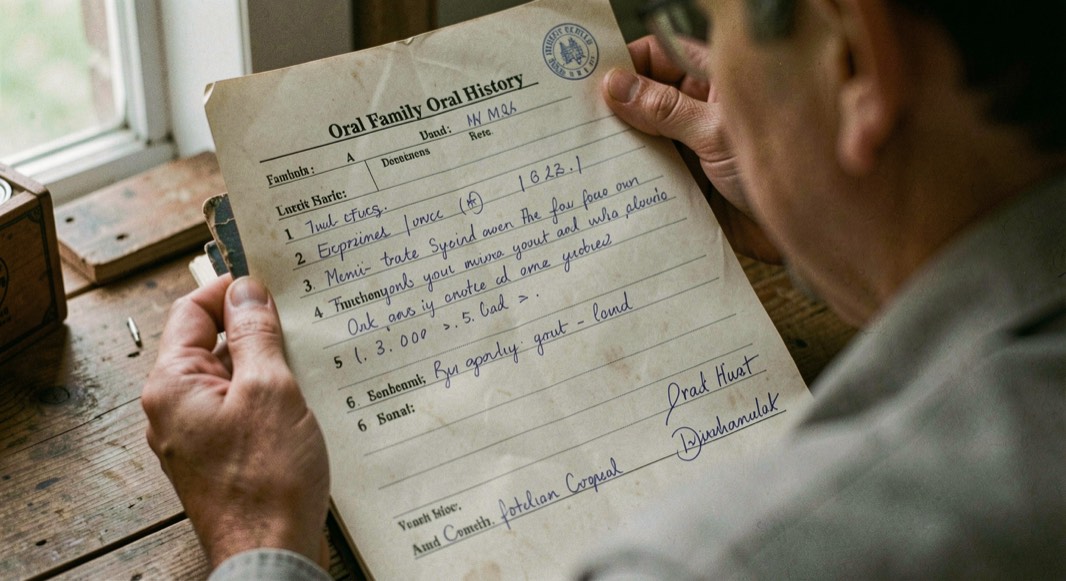
Record where an item came from, who keeps it, and what is known about its date. Mark uncertainty clearly. A note that says “probably” is more useful than a confident detail that cannot be checked later. Keep copies respectful of privacy and of the person who owns the original.
Invite more than one reading
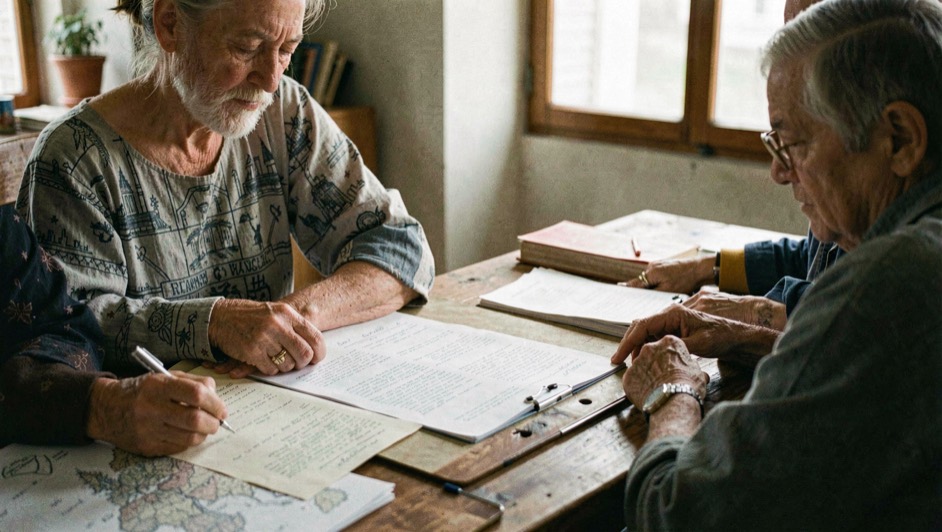
Ask what a younger person notices first and what an older person remembers around it. The difference is not a problem to solve. It is part of the archive. A shared caption can include both the visible description and the questions that remain open.
- Choose a small set of objects with clear permission.
- Scan or photograph them without altering the originals.
- Save names, dates, places, and uncertainty in a simple register.
- Return a copy to the people who contributed.
The archive becomes a bridge when it leaves room for care, disagreement, and another generation's additions.
Keep the context, make the decision visible, and leave a useful next step.
Continue the thread
Read the local archives topic, open the working abroad dossier, or meet the editorial desk.